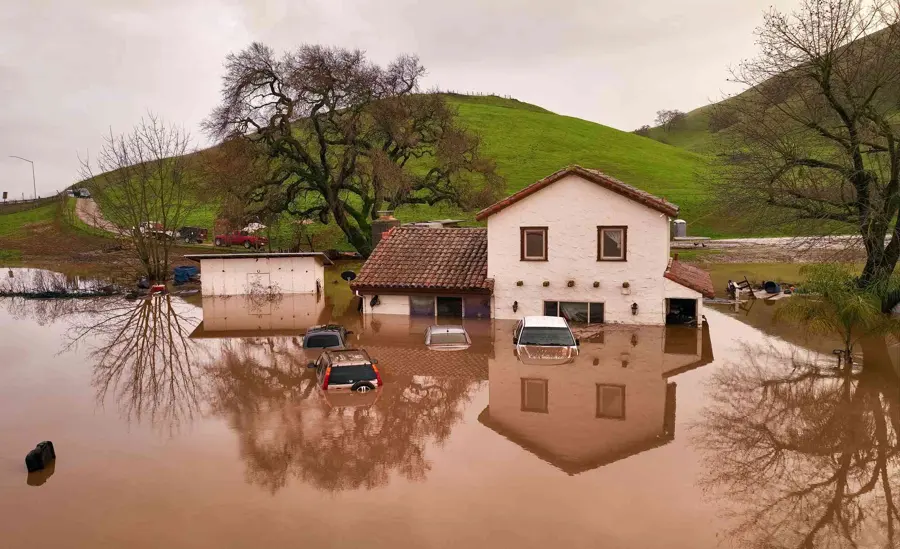
Most of the year's rain on this coast falls from November to March, often in short, heavy winter storms. A single storm on April 10, 2020 showed how fast that can add up: 12 flooding incidents in Encinitas, with several people evacuated from homes.
Key takeaways
- The April 10, 2020 storm brought 12 flooding incidents in Encinitas, and police reported several people evacuated from homes.
- The same storm put 9 inches of water across the Interstate 5 off-ramp at Lomas Santa Fe Drive.
- Tile and flat roofs tend to leak in the first big storm after the dry season, so ceiling stains are an early warning.
- Solana Beach put out pre-filled sandbags, limited to five per household, before a February 2025 storm.
- Water that comes in from outside is contaminated, so cleanup starts with extraction, removal and sanitizing.
What one storm did on both sides of the border
The April 10, 2020 storm is a useful example because it touched both cities. It brought 12 flooding incidents in Encinitas, and police reported several people evacuated from homes.
Across the border, the northbound Interstate 5 off-ramp at Lomas Santa Fe Drive was flooded that evening, with 9 inches of water reported across the road.
What the reports do and do not say
The ramp report describes a freeway ramp, not any house. The Encinitas report does mention people leaving homes, which is a reminder that heavy rain can reach living spaces.
Neither report gives a damage total, so they are best read as signs of how quickly conditions change.
Why the first big storm finds the roof
Tile and flat roofs along the coast tend to show leaks in the first big storm after the dry season. Months of dry weather can leave sealants and flashing brittle, and the first heavy rain finds the weak spots.
Wind adds stress. A 57 mph gust was recorded at the Solana Beach weather station on March 7, 2016, and a 64 mph gust was recorded at Fletcher Cove on January 25, 2021.
Signs of a roof leak after rain
A roof leak usually shows inside before anyone sees the roof.
- A brown or yellow ring on a ceiling that grows after rain.
- Bubbling paint or a damp patch near a ceiling corner.
- Water dripping from a light fixture or vent.
- A damp smell in a hallway, closet or upper floor.
What the city says about small roof repairs
The city of Solana Beach lists roof repairs covering under 25 percent of the roof that do not involve framing and happen no more than once in 12 months as not needing a building permit. Larger repairs are worth checking with the city before work starts.
When the city issues a storm advisory
On February 12, 2025, Solana Beach issued a storm advisory and put pre-filled sandbags in the City Hall parking lot, limited to five per household. The advisory cited a National Weather Service forecast of 1.5 to 2.5 inches of rain for the coastal and valley areas of San Diego County and a Flood Watch from Thursday at 1 PM through Friday at 4 AM.
A notice like that is a prompt to act before the rain, not after it.
- Clear gutters, downspouts and yard drains.
- Move cars and stored items away from low spots.
- Pick up sandbags if they are offered and place them at doors and garage openings.
- Find the main water shutoff and the electrical panel.
- Charge phones and keep a flashlight within reach.
Storm water at a door, garage or lower floor
Water at a threshold usually comes from the street, a yard or an overloaded drain. It needs a different response than water from a broken pipe.
Along this coast, Coast Highway 101 through Leucadia is known for ponding in heavy rain, a reminder that low spots collect water first.
Safe first steps
Safety comes first, and these steps need no tools.
- Stay out of standing water until power to that area is off.
- Switch off breakers for wet rooms if they can be reached safely.
- Photograph the water level, floors, walls and damaged items.
- Lift valuables and electronics out of the water's reach.
- Keep children and pets away from the wet area.
What the water carries
Runoff picks up dirt, oil, yard chemicals and bacteria on its way to a door. Even a shallow amount that dries quickly leaves residue behind, so wet flooring is cleaned as well as dried.
Garages and entryways are the usual first stops, and water can move from there under a door into hallways and carpeted rooms.
How cleanup and drying run
Water that comes from outside is treated as contaminated, so porous materials such as carpet, pad and lower drywall often cannot be saved. Surfaces that touch the water are cleaned and sanitized before drying begins.
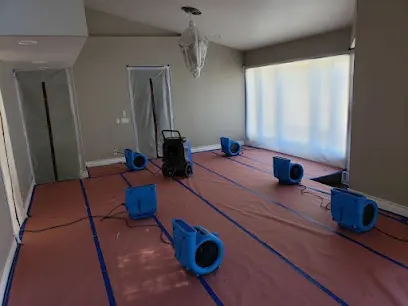
Storm and flood cleanup follows the same order each time: extraction, removal, sanitizing and drying. The flood cleanup service is set up the same way on both sides.
- Extraction of standing water from floors, carpet and low areas.
- Removal of soaked carpet, pad, baseboards and lower drywall.
- Cleaning and sanitizing of every surface the water touched.
- Drying with air movers and dehumidifiers until readings return to normal.
Roof leaks and ceiling stains after the storm
Not every wet house after a storm has water at the door. Many have a ceiling stain that appeared overnight, and that is a roof leak water damage problem rather than a flood problem.
Wet attic insulation holds water and keeps the ceiling wet long after the rain stops. Crews check the ceiling, the insulation above it and the top of the walls.
- Bag and remove soaked insulation.
- Cut away sagging or saturated ceiling sections.
- Dry the ceiling cavity and the tops of walls.
- Schedule the roof repair separately, once the rain allows.
A simple storm checklist
A few habits make a wet week easier on any home along this coast. Most take an afternoon.
- Before the season: check the roof, flashing, gutters and yard drains.
- Before a forecast storm: place sandbags, clear drains and move vehicles.
- During a storm: watch ceilings and door thresholds, and keep phones charged.
- After a storm: look for new stains, damp carpet and musty smells.
- If water gets in: shut off power safely, photograph the damage and arrange water extraction promptly.
Questions
What happened in the April 10, 2020 storm?
It brought 12 flooding incidents in Encinitas, where police reported several people evacuated from homes. In Solana Beach, the northbound Interstate 5 off-ramp at Lomas Santa Fe Drive was flooded with 9 inches of water.
Do roofs leak more in the first storm of the season?
Tile and flat roofs along the coast tend to show leaks in the first big storm after the dry season, often because sealants and flashing have been through a long dry stretch.
What did Solana Beach do before the February 2025 storm?
The city issued a storm advisory and placed pre-filled sandbags in the City Hall parking lot, limited to five per household.
Why is storm water cleanup different from a pipe leak?
Storm water can carry dirt, bacteria and chemicals, so porous materials are often removed and surfaces are sanitized before drying.
Does storm water always mean a flood cleanup?
Not always. A ceiling stain after rain is usually a roof leak, while water at a door or garage points to runoff. The source decides which plan fits.
What should be done first if water gets in?
Stay out of standing water until power is off, photograph the damage, lift valuables and arrange extraction as soon as it is safe.