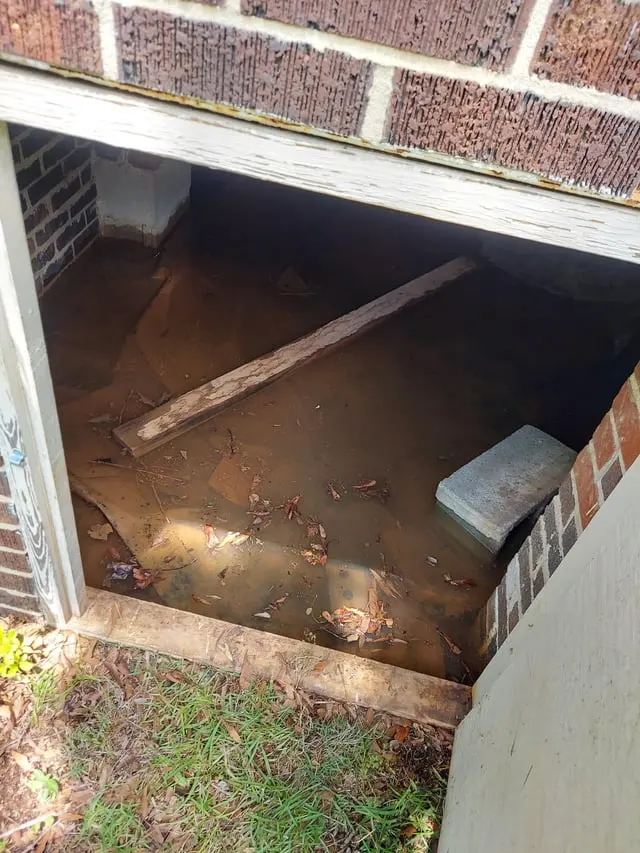
Beach cottages and bungalows in Old Encinitas, Leucadia and Cardiff often sit on raised wood floors, and the open space underneath can hold water for days before anyone notices. A soft board, a sticking door or a damp smell is often the first clue.
Key takeaways
- Water under a raised floor usually shows up as a spongy board, cupped planks or a damp smell long before a puddle appears.
- Stopping the source comes first: shut off the main supply if a pipe or hose is leaking, and keep people off soft flooring.
- Standing water is pumped out first, then joists and subfloor are dried with air movers and dehumidifiers.
- The coastal marine layer holds indoor humidity high, so drying a cottage can take longer than expected.
- Photos and moisture readings taken early make later decisions about what stays and what goes much easier.
How water under a raised cottage floor shows itself
Water below a wood floor rarely announces itself. It tends to start with a board that feels soft, a door that suddenly sticks or a floor that bounces in one spot.
Signs inside the cottage
The floor is usually the first place to tell the story, especially near a bathroom, kitchen or washer.
- Soft or springy boards, or planks that have started to cup or gap.
- A damp smell that is strongest at floor level and fades higher up the wall.
- Staining along the baseboards, or paint that bubbles near the floor.
- A water meter that keeps moving when every fixture in the house is off.
Signs from outside
The outside of the house can add useful evidence, particularly after rain.
- Pooled water or a wet strip along an outside wall.
- An outdoor faucet or hose connection that drips onto the ground beside the house.
- A wet or musty smell near the access hatch or the under-floor vents.
Why older cottages are exposed
Many of the cottages and bungalows in the older parts of town date from the early and middle 1900s, and many sit on raised wood floors. Older homes of that kind can still carry galvanized supply pipe, and a pinhole in an aging pipe can drip under a floor for weeks.
Rain adds a second source. Most of the year's rain falls from November to March, often in short, heavy winter storms, and the first big storm after the dry season tends to find every weak spot.
Coast Highway 101 through Leucadia is known for ponding in heavy rain, a reminder that water near the coast moves toward low ground and sometimes finds its way under a house.
- Supply leaks: a slow drip from an old pipe or a washer hose near the floor.
- Drain leaks: a bathroom or kitchen drain that weeps below the floor.
- Storm water: runoff that works its way under the house during heavy rain.
- Appliance failures: a water heater or dishwasher leak that runs down through gaps in the floor.
The first hour: stop the source, then the water
The order matters. Water that is still arriving has to be stopped before any removal makes sense.
A homeowner can do most of this without tools, and every step helps the crew that follows.
- Shut off the main water supply if a pipe or hose is the likely source.
- Switch off power to wet outlets and to any equipment near the floor.
- Keep people and pets off boards that feel soft or bounce.
- Photograph wet areas, stains and the water meter reading.
- Lift rugs and furniture off wet flooring and move stored items out of reach.
- Leave the flooring in place until the source is stopped and the moisture has been mapped.
How removal and drying work under a floor
A raised floor changes the job. The water sits below the part of the house people live in, so the plan has to reach it from underneath as well as from above.
Pumping and extraction
If water is standing in the under-floor space, it comes out first. Crawl space water removal uses small pumps and wet vacuums that reach low, tight spaces.
Where a leak has soaked the floor itself, emergency water extraction pulls the water out of carpet, pad and floor surfaces before it travels farther.
Drying joists and subfloor
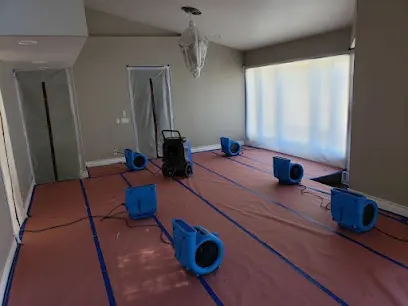
Wood framing is dried rather than replaced whenever it can be. Moisture meters show when the readings return to normal, and equipment stays until they do.
- Readings in joists, subfloor and the underside of the flooring.
- Thermal imaging to find wet zones that cannot be seen.
- Any insulation under the floor, which holds water and often has to be removed.
- Daily readings that decide when the equipment can come out.
Why coastal air slows the schedule
The marine layer known as May Gray and June Gloom keeps indoor humidity high along the coast, and that slows drying. Dry air pulls moisture out of wet wood quickly, while damp air barely does.
A cottage that dries fast in a dry spell can need longer when the sky stays gray. Structural drying crews log readings every day so the schedule follows the wood rather than a calendar.
Opening windows to help can backfire when the air outside is as damp as the air inside. Closed rooms with dehumidifiers usually work better.
- Keep windows and doors closed while equipment runs.
- Leave air movers and dehumidifiers where the crew placed them.
- Report any new stain, smell or soft spot right away.
Common mistakes with water under a floor
Most of the damage that spreads in a cottage comes from waiting, not from the leak itself. A small, steady source under a raised floor can run unnoticed through a whole winter.
Treating the symptom instead of the water also costs time, because wood stays wet far longer than the surface suggests.
- Waiting for the floor to dry on its own, which rarely happens with water trapped below.
- Pointing household fans at the boards while water still sits underneath.
- Pulling up flooring before the source is found and the moisture is mapped.
- Ignoring a damp smell because the floor looks fine from above.
- Covering a stained area with a rug or new flooring before readings come back normal.
Deciding what stays and what goes
Original wood floors can often be saved when water is caught early. Cupped boards frequently flatten as they dry, though badly soaked planks sometimes need to be replaced.
The type of water matters too. Clean water from a supply pipe is handled differently from storm runoff or sewage, and a storm and flood cleanup calls for more removal and cleaning than a clean pipe leak.
Drywall wicks water upward, so the lower few inches of a wall are checked even when the stain looks small.
Questions
How can a homeowner tell if water is under a cottage floor?
Soft or bouncing boards, cupped planks, a damp smell at floor level and a water meter that keeps running with everything off are the common signs. A moisture meter gives a firm answer.
Is it safe to walk on a floor that feels soft?
It is better to keep people and pets off it. Wet framing and subfloor can weaken, and a soft area may give way.
Should the water supply be shut off right away?
If a pipe or hose is the suspected source, yes. Closing the main supply stops new water while the rest of the plan is arranged.
Does coastal weather really slow drying?
Yes. The May Gray and June Gloom marine layer keeps indoor humidity high, so drying equipment has less dry air to work with and the schedule often runs longer.
Can original wood floors in an older cottage be saved?
Often, when the water is caught early and drying starts quickly. Moisture readings show whether the planks are returning to normal or need to be replaced.