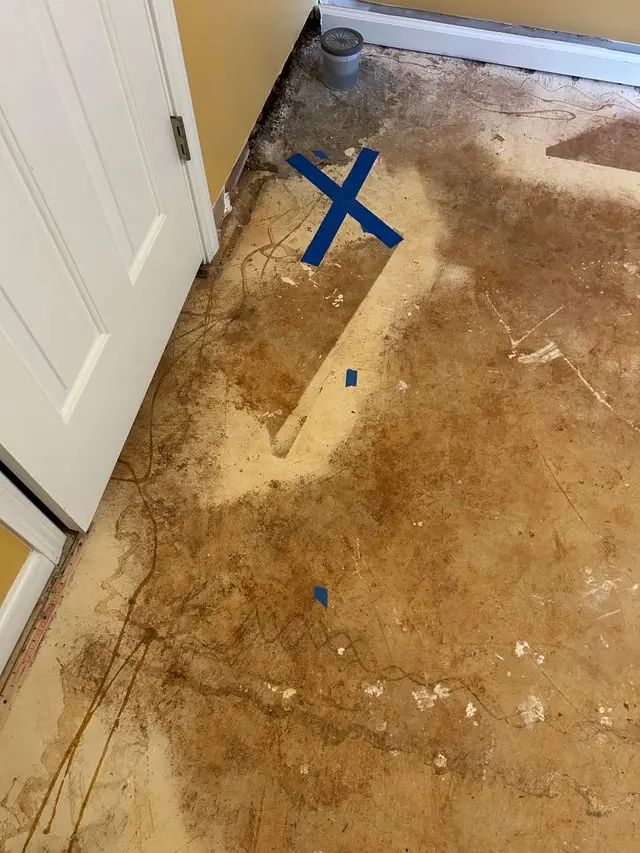
Many homes and condos east of Interstate 5 were built in the 1970s and 1980s on concrete slabs, and the copper supply pipe in those homes runs under the floor where no one can see it. When that pipe leaks, the first clue is usually a sign in the house rather than a puddle.
Key takeaways
- A slab leak is a supply pipe leak under a concrete floor, so the water stays hidden until it shows up as heat, sound or damp flooring.
- A water meter that keeps moving with every fixture off is the simplest early test.
- Shutting off the main supply and calling a plumber comes first, because new water keeps feeding the damage.
- Once the leak is found, extraction and drying deal with the floors, wall bottoms and cabinets that absorbed the water.
- Repair and cleanup work best when they are planned together, since opening the slab affects what has to be dried.
Why slab leaks hide in these neighborhoods
Village Park and New Encinitas are made up largely of 1970s and 1980s tract homes and condos built slab on grade. In that kind of construction the supply pipe runs through or under the concrete, so a pinhole leak can feed water into the floor for a long time before anything shows.
Concrete does not soak up much water, which is part of the problem. The water looks for cracks, joints and the edges of the slab, then rises into whatever sits on top.
Homes where it tends to go unnoticed
A leak under a quiet hallway or a closet floor can run a long time. Condos add another layer, because water that escapes one unit can reach a shared wall.
- Rooms with tile or laminate over the slab, which hide moisture below.
- Homes where the water heater sits in a garage or closet and its pipe runs under the floor.
- Condos and attached homes where a wall is shared with a neighbor.
Signs a slab leak may be under way
No single sign proves a slab leak, but several together are hard to ignore. The signs below are the ones most often noticed before a plumber is called.
Signs on the floor and walls
The surface of the floor often reacts before anything else does.
- A warm spot on the floor, which can point to a leaking hot water pipe.
- Damp carpet or a wet area with no obvious source.
- Laminate or engineered wood that lifts, swells or separates at the seams.
- Cracks in tile or grout that were not there before.
- Baseboards that stain or paint that bubbles near the floor.
Signs in the plumbing
Sound and water use can give the leak away even when the floor looks normal.
- The sound of running water when every fixture is closed.
- A water meter that keeps moving with everything turned off.
- A sudden rise in the water bill without a change in habits.
- Weak water pressure at fixtures that used to run well.
Telling a slab leak from other causes
A wet floor does not always mean a slab leak. Sorting out the cause early keeps the plumber and the restoration team from working on the wrong problem.
A few simple comparisons narrow it down before any tools come out.
- An appliance leak leaves a wet spot beside a washer, dishwasher, refrigerator or water heater, and it stops when the appliance is shut off.
- A drain leak shows up as a smell and dampness near a bathroom or kitchen, and it appears only when water is running down the drain.
- A roof or ceiling leak stains the ceiling first and usually follows rain.
- A supply leak under the slab keeps going day and night, which is why the meter keeps moving.
What to do in the first hour
Because the leak is feeding the damage every minute, stopping the supply is the priority. A few steps are enough to protect the house until a plumber confirms the source.
- Turn off every fixture and appliance, then read the water meter and check again after a short wait.
- Shut off the main water supply if the meter dial is still moving.
- Photograph wet or warm areas and note where they are on the floor.
- Move rugs, furniture legs and cabinet contents off wet flooring.
- Call a plumber to find and fix the leak, and call restoration for the water already in the house.
How water behaves above a slab
Water that comes up through a slab spreads sideways under flooring much faster than it spreads up. It runs to the lowest point, then wicks into anything porous that touches the floor.
That is why a small wet spot can mean a large wet area under the surface. Moisture mapping shows the true edges.
- Carpet and pad hold water and often need partial removal.
- Laminate and engineered wood swell at the seams and rarely recover once soaked.
- Tile and grout hide water below, so the subfloor and adhesive stay wet.
- Drywall and cabinet bases wick water upward from the floor.
- Baseboards and door jambs trap moisture along the wall.
What restoration does once the leak is found
The plumber deals with the pipe, and the restoration team deals with what the pipe soaked. The two jobs overlap more than most owners expect.
Extraction and flooring removal
Emergency water extraction removes standing water and pulls moisture from carpet and pad. Wet flooring that cannot be dried in place is lifted so the slab surface can breathe.
Drying and moisture checks
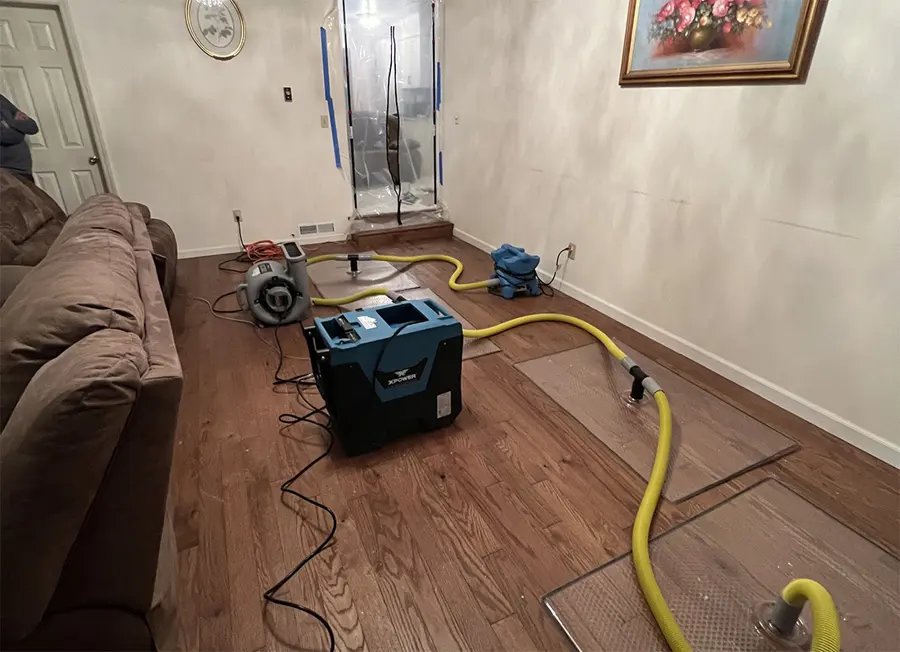
Structural drying sets air movers and dehumidifiers around the wet areas and logs readings each visit. The equipment stays until walls, floors and cabinet bases read normal.
Along the coast, damp air slows this work, which is one reason readings steer the schedule instead of a fixed number of days.
Repair and cleanup in the right order
Repair methods vary, from opening the slab at the leak to rerouting the pipe, and the plumber chooses the approach. Each method changes what has to be dried, so a quick conversation between the two crews saves time.
If the leak turns out to be inside a wall or ceiling instead, the job looks more like burst pipe cleanup, with different access points and a different drying plan.
- Ask the plumber where the slab will be opened so drying equipment stays out of the way.
- Keep photos of the damage before any flooring is removed.
- Confirm that moisture readings are normal before new flooring goes down.
Questions
How does a plumber find a slab leak?
Plumbers use pressure tests and listening or imaging tools to trace the leak to a spot on the floor. The restoration work starts once the source is stopped.
Is a high water bill a sign of a slab leak?
It can be, especially when the bill jumps with no change in habits. A meter that moves with every fixture off is a stronger sign.
Can a slab leak damage walls and cabinets?
Yes. Water spreads under the flooring and wicks into baseboards, drywall bottoms and cabinet bases, so those areas are checked with a moisture meter.
Does every slab leak mean tearing up the floors?
No. Some floors can be dried in place, while carpet, pad and swollen laminate usually come out. Readings decide what stays.
Who handles a slab leak in a condo?
The repair and the restoration still follow the same steps, but shared walls and neighbors add coordination. Photos and early readings help everyone involved.