Slab Leak Water Damage in San Marcos, CA
A slab leak sends water under a concrete floor, unseen until flooring lifts or the water bill jumps. The restoration team traces the wet zone, opens only what must open and dries the slab in San Marcos.
(888) 450-9281Get the slab leak checked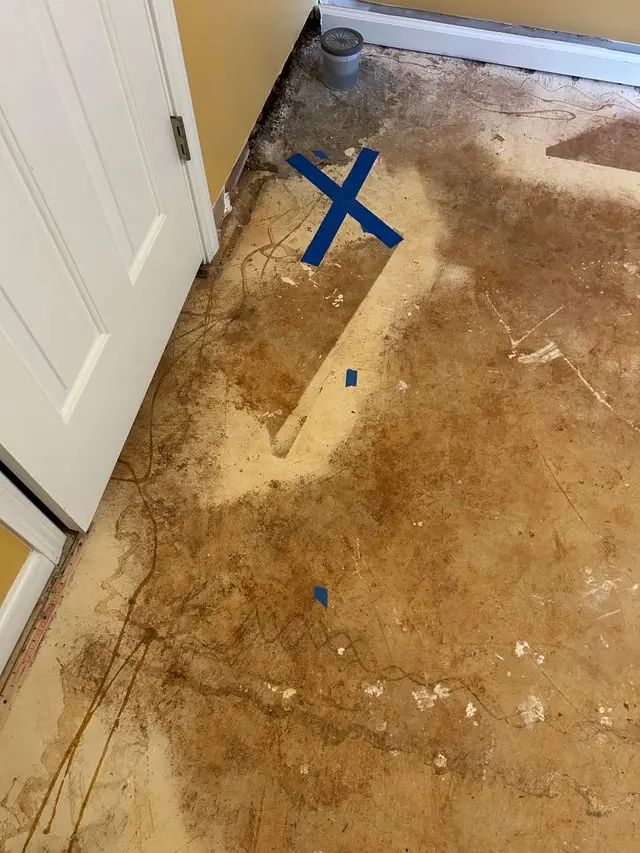
How slab leak water damage is handled in San Marcos, CA
- 01
Locate the wet zone
Thermal imaging and a pin meter outline the damp area on the floor, and the plumber's leak finding narrows where the water entered.
- 02
Open only what is wet
Flooring over the affected zone comes up and wall bottoms get small access cuts where moisture has wicked upward.
- 03
Dry the concrete
Desiccant or LGR dehumidifiers pair with air movers, since concrete gives up moisture slowly and needs steady, dry air.
- 04
Confirm and close out
Readings come down to a dry reference before equipment leaves, and the log goes into the claim file.
What does slab leak water damage cost in San Marcos, CA?
A caught-early slab leak with one affected area usually costs $2,500 to $4,500, while a long-running one that reached most of a level can pass $20,000. The plumbing repair itself is a separate bill.
- Small flooring section lifted
- Slab and wall bottoms dried
- Readings logged daily
- Laminate or wood removed
- Wet lower drywall cut out
- LGR or desiccant slab drying
- Most of a level affected
- Built-ins detached for access
- Extended slab drying
Biggest cost drivers: The size of the wet zone, how long the leak ran, the flooring type and whether cabinets sit on top all move a job between ranges. For a closer planning number, run the water damage cost calculator. Every figure here is a typical range, not a quote.
First steps for slab leak water damage in San Marcos
- 1
Shut the water off. Close the main; if the meter still turns with fixtures off, the leak is active.
- 2
Note the signs. Mark warm spots and damp baseboards, then photograph them with dates.
- 3
Call a plumber. A plumber confirms and repairs the break before drying can finish.
- 4
Plan the drying. The team maps the wet zone and sets equipment once the leak stops.
Most slab leak calls start with a symptom rather than a puddle: a warm patch on the floor, a musty smell, a baseboard that swells or a water bill that does not match the household. By then the water has often been soaking into the slab and the walls for a while.
What the housing numbers say
The 2019 to 2023 federal profile for the local school district area, which reaches beyond the city, shows 54.7 percent of homes built from 1970 to 1999 and 35.6 percent in 2000 or later. How many of them sit on slabs is not known locally, so each house is checked, not assumed.
Signs worth acting on
Several clues point to water moving under the floor, and a burst pipe can look similar at first:
- Warm or damp spots on a floor that is otherwise dry
- The sound of running water with every fixture off
- Baseboards that swell or flooring that lifts and cups
- A water bill that jumps with no change in use
How the wet zone gets found
Thermal imaging and moisture meters outline the wet area without cutting into it, and the plumber's findings tell the team where the water entered. Flooring is lifted only over that zone, so the work stays small and the repair bill does not grow with it.
Drying concrete takes patience
Concrete holds water like a sponge and releases it slowly, so desiccant or LGR dehumidifiers run with air movers under lifted flooring and along wall bottoms. Readings are logged daily until the slab and framing sit near a dry reference, and no new flooring goes down early. Related work is covered under structural drying.
Floor warm, meter still running?
(888) 450-9281San Marcos water removal, day or nightRelated water damage services in San Marcos
Slab Leak Water Damage across San Marcos
Slab leak calls come from across the city, including North City, the University District, San Elijo Hills and Discovery Village, in ZIP codes 92069, 92078 and 92096, with Lake San Marcos homes included.
The same service nearby: slab leak water damage in Encinitas, Vista, Carlsbad.
Slab Leak Water Damage questions in San Marcos, CA
Short, specific answers about slab leak water damage for San Marcos homes and businesses.
(888) 450-9281Still wet in San Marcos? Call nowHow do I know it is a slab leak?
Warm floor spots, the sound of running water with fixtures off, a meter that keeps turning and unexplained damp flooring are the usual clues. A plumber confirms the source with leak detection tools.
Does insurance cover a slab leak?
Coverage varies by policy: many pay for resulting water damage from a sudden leak but not for repairing the pipe itself. Read your own policy or ask the insurer before work starts.
Can the slab be dried in place?
Yes. Concrete can be dried with desiccant or LGR dehumidifiers and air movers, although it takes longer than wood or drywall. Daily readings show when the slab is dry enough for new flooring.
Will the floors have to come out?
Usually only over the wet zone. Wood and laminate swell and rarely recover, so those come up, while tile can often stay if the area below is dried. The thermal camera sets the boundary.
How much water does a hidden leak waste?
The city's watershed page says the average household loses roughly 180 gallons a week, about 9,400 gallons a year, to leaks. That is a general household figure, not a San Marcos measurement, but it shows why hidden leaks matter.
How long does slab drying take?
Longer than most materials, often a week or more, set by slab thickness, humidity and the equipment used. The readings, not the calendar, decide when the job ends.
Find the leak, then dry the slab
Water under concrete keeps spreading into wall bottoms while the source runs. The restoration team maps the wet zone and starts drying as soon as the plumber has stopped the leak.