
The $100 million San Marcos Creek Project finished with a ribbon cutting on October 16, 2024, and it was built to reduce flooding. A new bridge and a levee help, but they do not make a house immune to storm water.
Key takeaways
- The project began in March 2020 and added new bridges, raised roadways, a widened street and an earthen levee south of the project area.
- It was built to reduce flooding, not to end it, and other sources of water remain.
- Rain averages about 13 inches a year, mostly from November to March, with up to 20 inches in the hills.
- Floodwater from a creek or street carries contamination, so it is handled differently from a clean pipe leak.
- Photos, a safe shutoff of power and early extraction limit the damage if water does enter a home.
What the creek project built
Work began in March 2020 and wrapped up with a ribbon cutting on October 16, 2024. The project reshaped how the creek moves through the middle of San Marcos, California.
- New bridges at Via Vera Cruz and Bent Avenue, with those roadways raised to reduce flooding.
- A widened Discovery Street.
- An earthen levee that protects residents and roadways south of the project area.
- Restored creek habitat with more than 105,000 new trees and plants.
- Paseo del Arroyo Park, opened as part of the work.
What it was meant to change
Before the project, residents on the south side of the creek were blocked from leaving their neighborhood whenever the creek flooded in a rainstorm. The Via Vera Cruz bridge opened on December 20, 2023, ahead of the finished project.
The roadways were raised to reduce flooding, and the earthen levee protects residents and roadways south of the project area.
Reduce is not the same as end
A project of this size changes the odds, but it does not remove all risk. Creeks can still rise, and roofs, pipes and drains can still fail in the same storm.
What the project does not cover
FEMA's study for San Diego County lists several flooding sources it examined in San Marcos, and the creek is only one of them. The list also includes a Highway 78 split flow, Lake San Marcos, Twin Oaks Valley Creek and the Las Posas Road drainage system.
Rain adds to the picture. The city gets about 13 inches a year, mostly from November to March, with up to 20 inches in the San Marcos Hills.
Any of the following can bring water into a home during the same storm, which is why a wet house is not always a creek problem.
- A roof leak during a heavy storm.
- A blocked yard drain that sends water toward a door.
- A pipe or hose that fails while the ground is wet.
- Runoff from a different drainage system than the creek.
A look at January 22, 2024
A news report on the January 22, 2024 storm lists 2.24 inches of rain for the city and mentions no flooding there. That Monday was the fourth wettest day in San Diego since 1850.
The report is a reminder that outcomes depend on where the rain falls and what the drains can carry, so a wet day does not always mean a flooded street.
If storm water does enter a home
Storm water that crosses a threshold needs a different response than a leak from a supply pipe. It can carry dirt, bacteria and chemicals from streets and yards.
Safe first steps
Safety comes first, and most of these steps need no tools.
- Stay out of standing water until power to that area is off.
- Switch off the breaker for wet rooms if it can be reached safely.
- Photograph the water level, the walls and the damaged items.
- Lift valuables, electronics and papers above the water.
- Keep children and pets out of the wet area.
- Avoid walking through the water in bare feet, since it may carry contamination.
Why this is not a clean water job
Water that comes in from outside is treated as contaminated. Restoration standards group water by how dirty it is, and floodwater from a creek or street falls in Category 3, the most contaminated group.
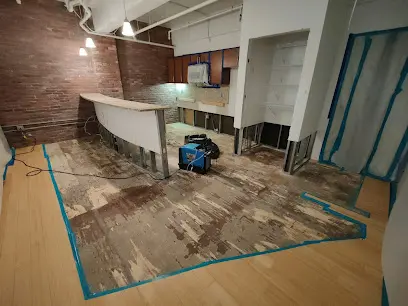
Porous materials such as carpet, pad and lower drywall often cannot be saved, and surfaces are cleaned and sanitized before drying starts.
How extraction and drying proceed
Storm and flood cleanup starts with getting the water out. Emergency water extraction uses truck mounted or portable units to remove standing water from floors and carpet.
Wet building materials can start to support mold growth after 24 to 48 hours, which is why extraction cannot wait for the rain to stop.
Once the surface water is gone, structural drying sets air movers and dehumidifiers around wet walls and floors. Readings are logged at each visit, and equipment stays until the framing and drywall read normal.
- Extraction of standing water and soaked carpet and pad.
- Removal of damaged lower drywall and baseboards.
- Cleaning and sanitizing of surfaces that touched floodwater.
- Drying until moisture readings return to normal.
What can be saved after storm water
Not everything touched by floodwater has to go. Hard, non porous materials can usually be cleaned and kept, while soft materials that soaked up contaminated water often cannot be.
Speed matters. The sooner water is removed, the more of the floor and furniture can be saved.
Usually saved
Hard surfaces tend to come through best because they do not absorb water.
- Tile, stone and sealed concrete floors, once cleaned and dried.
- Solid wood furniture that has been wiped, dried and cleaned.
- Metal and plastic items that can be sanitized.
Usually removed
Soft and porous materials hold contaminated water and are difficult to clean fully.
- Carpet and pad that sat in contaminated water.
- Lower drywall and insulation that wicked water upward.
- Particle board furniture and cabinets that swelled.
- Mattresses and soft furnishings that soaked.
Getting ready before the rainy months
A little preparation before November makes a wet night easier to handle. The steps are small and low cost.
It also helps to keep a flashlight, a phone charger and a few heavy trash bags in one place, so the first moments after a leak are not spent searching for supplies.
- Clear gutters, downspouts and yard drains.
- Find the main water shutoff and the electrical panel.
- Move stored items off garage and ground floors.
- Photograph each room so a record exists before any damage.
- Check ceilings and windows after the first big rain for new stains.
Questions
Did the creek project end flooding?
No. It was built to reduce flooding, and the levee protects residents and roadways south of the project area. Other sources of water remain.
When did the project finish?
The $100 million project began in March 2020 and finished with a ribbon cutting on October 16, 2024.
How much rain does the city get?
About 13 inches a year, mostly from November to March, with up to 20 inches in the hills.
Why is storm water cleanup different from a pipe leak?
Storm water can carry contamination from streets and yards, so porous materials are often removed and surfaces are sanitized before drying.
Can carpet be saved after storm water?
Carpet that sat in contaminated water is usually removed because it is hard to sanitize fully, and the pad underneath is removed in nearly every case.
What should be done first if water gets in?
Stay out of standing water until power is off, photograph the damage, lift valuables and arrange extraction as soon as it is safe.