Emergency Water Extraction in San Marcos, CA
Truck-mounted extractors and weighted tools take standing water out of carpet, pad and hard floors in San Marcos homes before it can travel into drywall, framing and the rooms next door.
(888) 450-9281Get the water out now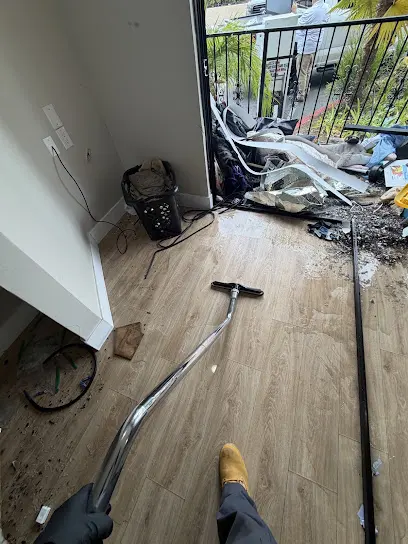
How emergency water extraction is handled in San Marcos, CA
- 01
Assess the water
The crew checks depth, source and category, then meters the surrounding materials to see how far the water has already traveled.
- 02
Pull the liquid
Truck-mounted units clear open carpet, weighted tools press water from carpet and pad, and wands handle tile, vinyl and sealed wood.
- 03
Remove what cannot dry
Contaminated or collapsed materials are bagged and carried out, which keeps the dehumidifiers working on what can be saved.
- 04
Set up the next stage
Air movers and dehumidifiers go in as the last pass finishes, with starting readings recorded for the claim file.
What does emergency water extraction cost in San Marcos, CA?
Extraction alone usually runs $400 to $6,000 or more, driven by how much water is down, how many rooms it reached and whether it is clean or contaminated. The walkthrough settles the final figure.
- Extractor passes over carpet
- Pad checked for saturation
- Baseboard edges metered
- Repeated weighted passes
- Saturated pad lifted and bagged
- Hard floors squeegeed dry
- Pumps for deep standing water
- Protective gear and containment
- Porous materials removed
Biggest cost drivers: Water depth, room count, water category and flooring type decide where a job lands in each range. For a closer planning number, run the water damage cost calculator. Every figure here is a typical range, not a quote.
First steps for emergency water extraction in San Marcos
- 1
Stop the supply. Shut the main or the fixture valve first, since extraction cannot keep up with a running leak.
- 2
Cut the power. Switch off breakers to wet rooms and keep cords and appliances off the floor.
- 3
Lift the small stuff. Raise furniture legs onto foil or blocks, and move rugs, books and electronics to a dry room.
- 4
Photograph the water. Capture the depth, the source and the damaged contents before the extraction crew starts.
Standing water begins moving into pad, tack strips and wall bottoms almost immediately. In San Marcos, the extraction crew removes it as liquid first, because liquid removal costs less and saves more material than any amount of air movement.
Winter rain and standing water
Rain falls mostly from November to March, about 13 inches a year and up to 20 in the hills. Residents south of the creek used to be blocked from leaving whenever it flooded. A clogged gutter, a failed seal or a backed-up drain can still put water on a floor overnight.
What the extraction crew brings
- Truck-mounted extractors for large areas of carpet and pad
- Weighted tools that press water out of carpet without lifting it
- Squeegee wands for tile, vinyl and sealed hardwood
- Submersible pumps when water is deeper than a squeegee can handle
Carpet, pad and what stays
Clean water caught early often leaves carpet in place, extracted from above while the pad is lifted or pulled back for airflow. Gray or black water changes that: pad and porous finishes come out, because no amount of cleaning makes them safe again.
Storm runoff and Category 3
Water that has crossed a yard, a driveway or a drain is treated as Category 3 until the walkthrough says otherwise. The crew wears protective gear, contains the area and removes porous flooring; flood cleanup covers larger storm events. Rinse water stays out of storm drains, which the city's code protects from soap, chemicals, dirt and grease.
After the water is out
Extraction removes liquid, not the moisture already inside materials. The team maps what remains with meters and a thermal camera, then hands the job to structural drying with air movers and dehumidifiers running to a written plan, as covered in structural drying.
Water still spreading through the house?
(888) 450-9281San Marcos water removal, day or nightRelated water damage services in San Marcos
Emergency Water Extraction across San Marcos
Extraction crews work across the city, including the Creek District, the University District, San Elijo Hills and Lake San Marcos, and reach businesses and homes along State Route 78 and Twin Oaks Valley Road.
The same service nearby: emergency water extraction in Encinitas, Vista, Carlsbad.
Emergency Water Extraction questions in San Marcos, CA
Short, specific answers about emergency water extraction for San Marcos homes and businesses.
(888) 450-9281Still wet in San Marcos? Call nowHow much water can an extractor remove?
A truck-mounted unit can pull far more than any shop vacuum, and most of the water in carpet and pad comes out in the first passes. What remains is bound inside the materials and goes to drying.
Can carpet survive a soaking?
Often, when the water was clean and extraction started early. The pad is lifted or pulled back for airflow and the carpet is dried in place; contaminated water means both come out.
Does storm water count as Category 3?
Water that has crossed yards, driveways or drains is generally treated as Category 3 until assessed at the walkthrough. That means protective gear, containment and removal of porous materials before any drying starts.
Where does the extracted water go?
Clean water is discharged outdoors away from the foundation. Contaminated water is handled as waste, and rinse water never goes to storm drains, since the city's code bars soap, chemicals, dirt and grease from them.
Is extraction enough to stop mold?
No. Extraction removes liquid, but wet framing and drywall still hold moisture, and mold can begin in 24 to 48 hours. Dehumidifiers and air movers finish the job with daily readings.
Should wet belongings be moved first?
Light items, yes, but keep people off soaked floors near outlets and leave heavy furniture where it is. Photograph everything first so the claim file shows the original condition.
Get the standing water pulled out.
Pad, drywall and framing absorb more with every passing hour, so crews are sent at any time of day or night to pull the water and start the drying plan.