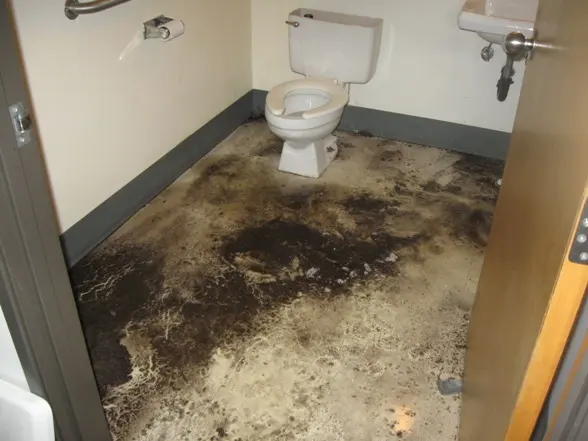
When sewage comes up through a floor drain or a bathtub, the first question is usually whose pipe it is. In Vista the answer depends on where the problem sits, because the private lateral and the public sewer are handled by different parties.
Key takeaways
- City Ordinance 78, Section 9.10 makes residents responsible for maintaining the whole private sewer lateral and its connection to the public main.
- The city's right to enter an easement to clean and inspect pipes does not make it responsible for maintaining the lateral.
- Sewage is treated as the most contaminated kind of water, so cleanup follows containment, removal and disinfection steps.
- Stopping water use and keeping people away are the first moves, before any plumbing work begins.
- A plumber finds the blockage, and the restoration team handles what the backup left behind.
What a sewer backup looks like inside a home
A backup rarely arrives all at once. It often starts with slow drains, gurgling sounds and a smell that gets stronger near the lowest fixtures in the house.
- Several drains running slowly at the same time.
- Gurgling from a toilet or tub when another fixture drains.
- Water coming up through a shower, tub or floor drain.
- A sewage smell near a bathroom, laundry area or garage drain.
The private lateral and the public sewer
A home connects to the public sewer through a pipe called the lateral. The ownership of that pipe is what decides who arranges the repair.
What the city ordinance says
Under City Ordinance 78, Section 9.10, residents are responsible for maintaining their entire private sewer lateral and its connection to the public main. The city's easement access to clean and inspect pipes does not make it responsible for that maintenance.
In practice, a blockage in the lateral is usually the owner's to clear and repair, and a plumber is the first call.
Two public collection systems
Sewer service in the city runs through two collection systems: the City of Vista system and the Buena Sanitation District, which is an entity of the city. Both send sewage to the Encina Water Pollution Control Facility in Carlsbad for treatment.
The city owns and operates one small pump station, the Raceway Pump Station, and jointly owns two large pump stations with the City of Carlsbad. The Buena Sanitation District runs one large pump station.
Which system serves a particular home is something the city can confirm.
What the state requires of the public system
State Water Resources Control Board Order No. 2022-0103-DWQ requires the city and the Buena Sanitation District to keep a Sewer System Management Plan and operate the sewers to prevent sanitary sewer overflows.
That duty covers the public sewers. It does not change the owner's responsibility for the private lateral, so a backup from a clogged lateral stays with the property.
The first steps at home
Sewage is a health hazard, so the early steps are about stopping the flow and keeping people safe.
Stop the flow and stay safe
These steps need no tools and can start the moment a backup is noticed.
- Stop using toilets, sinks, the dishwasher and the washing machine.
- Keep children, pets and anyone with health concerns away from the wet area.
- Avoid chemical drain openers, which can splash and mix with sewage.
- Photograph the affected drains, floors and walls.
- Ask neighbors whether they have the same problem, since that can point to the public main.
What to tell the plumber and the cleanup team
Clear details speed up both jobs. A few facts give the plumber a head start and show the cleanup team how far the water went.
- Which drains backed up and which stayed clear.
- When the problem began and whether it has happened before.
- What was recently flushed or poured down a drain.
- Photos of the affected rooms before anything is moved.
Why sewage cleanup is a health job
Restoration standards group water by how contaminated it is, and sewage falls in the highest group, Category 3. It carries bacteria and other contaminants that make casual cleanup unsafe.
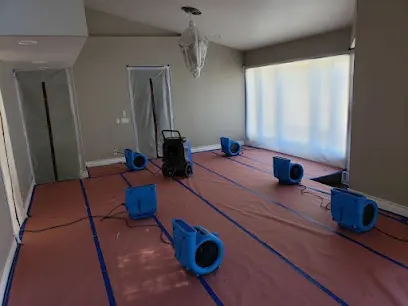
Sewage backup cleanup starts with containment and protective gear, then moves to removal and disinfection.
Fans alone are not enough, because moving contaminated air only spreads it. The area is sealed off first, and drying follows once the contaminated materials are out.
- Containment to keep the affected area separate from the rest of the home.
- Removal of carpet, pad and wet drywall that cannot be sanitized.
- Cleaning and disinfecting of floors, walls and any remaining surfaces.
- Disposal of contaminated materials in sealed bags.
- Drying and moisture checks before anything is rebuilt.
Common causes of a blocked lateral
A lateral can clog for several ordinary reasons. Most are gradual, which is why the first sign is often slow drains rather than a sudden flood.
The median home here was built in 1984, so many laterals have been in the ground as long as the house. Age alone does not prove a problem, but it is one reason to keep an eye on slow drains.
Grease and wipes
Fats, oils and grease harden inside pipes and narrow them over time. Chapter 14.12 of the municipal code controls and regulates fats, oils and grease, which reflects how common the problem is.
Wipes and other items flushed down toilets add to the buildup.
Roots and damaged pipe
Roots can work into joints, and a cracked or sagging section of pipe can catch debris. A plumber's camera inspection shows which one is the cause.
Backups in rentals and multi unit buildings
Nearly half of Vista's occupied homes are rented. Of 35,467 occupied homes, 16,080 are rented, and 10,964 homes sit in buildings of 5 or more units.
In those buildings a backup can reach several homes at once, so tenants should report it to the owner or manager right away and keep their own photos.
- Report the backup in writing and keep a copy.
- Note which fixtures backed up and when it started.
- Keep belongings off wet floors and out of the affected rooms.
- Ask that every affected unit be checked, not only the first one reported.
After the plumber: drying and rebuilding
Once the blockage is cleared, the water and the damage still have to be dealt with. Emergency water extraction removes standing water, and structural drying dries the floors and wall bottoms that remain.
Rebuilding waits until moisture readings return to normal. The wider sewage cleanup service covers backups across the area.
Questions
Who is responsible for the private sewer lateral in Vista?
City Ordinance 78, Section 9.10 makes residents responsible for maintaining their entire private sewer lateral and its connection to the public main.
Does the city's easement access change that?
No. The ordinance says the city's easement access to clean and inspect pipes does not make it responsible for maintaining the lateral.
How many sewer systems serve the city?
Two collection systems: the city system and the Buena Sanitation District, an entity of the city. Both send sewage to the Encina Water Pollution Control Facility in Carlsbad.
Why is sewage cleanup different from other water damage?
Sewage is treated as Category 3, the most contaminated water. Cleanup uses containment, protective gear, removal of porous materials and disinfection.
What happens to belongings that touched sewage?
Porous items such as carpet, pad, upholstery and cardboard are usually discarded. Hard items can often be cleaned and disinfected.
Should chemical drain cleaner be used on a backup?
It is better to avoid it. Chemicals can splash and mix with sewage, and a plumber has safer tools to clear the blockage.