Structural Drying in Oceanside, CA
Getting the water out is only half the job. The drying team sets air movers and dehumidifiers, maps moisture with meters and keeps taking readings until floors, walls and framing reach the dry goal.
(888) 450-9281Call to start the drying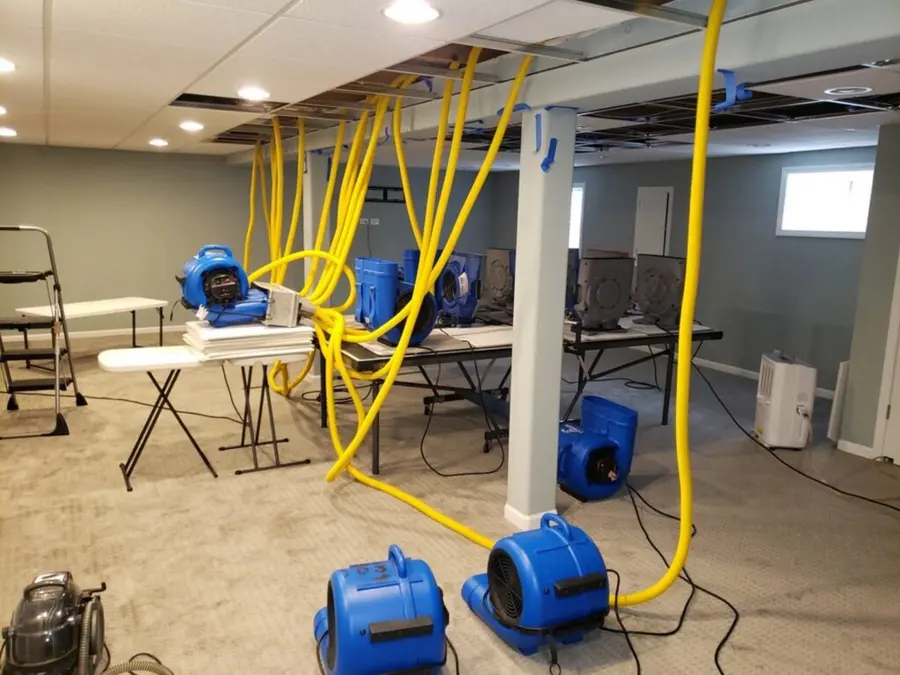
How structural drying is handled in Oceanside, CA
- 01
Map the moisture
Meters and a thermal camera mark every wet surface, and the readings set the dry goal for each material.
- 02
Size the equipment
The class of loss and the room volume decide how many air movers and LGR dehumidifiers go in, and where they point.
- 03
Monitor daily
Each visit adds readings to the log, equipment is repositioned and any stubborn spot gets a floor mat or a small opening.
- 04
Release and record
Equipment comes out when every material reads dry, and the final log and photos are filed for the claim.
What does structural drying cost in Oceanside, CA?
Structural drying usually costs $1,000 to $15,000 or more, depending on the class of loss, how many rooms and materials are wet, whether hardwood or concrete is involved and how many drying days are needed.
- Air movers and one LGR unit
- Several drying days
- Daily readings
- Injection drying for floors
- Multiple dehumidifiers
- Cavity drying
- Desiccant dehumidification
- Slab and plaster drying
- Extended monitoring
Biggest cost drivers: Class of loss, the number of wet rooms, dense materials like hardwood or plaster and the days of equipment needed set the total. For a closer planning number, run the water damage cost calculator. Every figure here is a typical range, not a quote.
First steps for structural drying in Oceanside
- 1
Remove the water first. Extraction before fans cuts drying time more than any piece of equipment.
- 2
Open the airflow. Remove baseboards and lift wet carpet corners so air reaches the wall bottoms.
- 3
Keep the house closed. Close windows and doors and keep the thermostat steady while equipment runs.
- 4
Leave the equipment on. Fans and dehumidifiers run until readings say dry, even when the room feels fine.
Structural drying is the part of water damage that nobody sees and everybody depends on. Wet framing, drywall and subfloor hold water long after the surface looks fine, and in Oceanside a large share of homes were built in the 1970s and 1980s, with 14,057 and 18,480 homes respectively.
Why drying takes days
Water moves into the pores of wood and drywall and leaves slowly. Air movers sweep it off the surface, while LGR dehumidifiers pull it from the air so the cycle keeps going. Too few machines stretch the job, and too many waste power, which is why equipment is sized to the room.
How the classes of loss work
- Class 1: little wet material, slow evaporation
- Class 2: a whole room, carpet and wall bottoms wet
- Class 3: water from above, soaking ceilings and walls
- Class 4: dense materials such as hardwood, plaster or concrete
What gets measured
Moisture meters give a number for each material, a thermal camera shows cool, wet zones, and a psychrometer tracks air humidity. Each visit adds new readings to the log, and equipment is moved or pulled as areas finish.
Dry standard and the claim
The IICRC S500 standard calls for drying to a dry goal set from unaffected materials, and the log of readings is what an adjuster sees. Insurance coverage depends on the cause of the water, which the policy and the insurer decide. For the first stage, see water extraction, and for hidden leaks see slab leak water damage.
A dry-feeling house can still be wet inside
(888) 450-9281Oceanside water removal, day or nightRelated water damage services in Oceanside
Structural Drying across Oceanside
Structural drying runs in every part of the city, from downtown and Mount Ecclesia to Rancho Del Oro, Ocean Hills and Morro Hills, in ZIP codes 92054, 92056, 92057 and 92058, after leaks, floods and storms.
The same service nearby: structural drying in Encinitas, Vista, Carlsbad.
Structural Drying questions in Oceanside, CA
Short, specific answers about structural drying for Oceanside homes and businesses.
(888) 450-9281Still wet in Oceanside? Call nowHow is dry confirmed?
Meters read each material and the numbers are compared with an unaffected reference. When every wet area matches, the structure is dry and the equipment is removed.
Why do dehumidifiers run so long?
Wood, drywall and concrete release moisture slowly, and an LGR unit has to keep pulling it from the air. Turning it off early lets the damp rebound into the walls.
Can fans alone dry a wet room?
Not reliably. Fans move moist air around, but without dehumidifiers the humidity just rises elsewhere, and wet cavities stay wet. Extraction, dehumidifiers and readings work together.
Is hardwood floor drying different?
Yes. Hardwood is dense and can cup, so it gets injection drying through mats, sometimes with a slower plan. Readings decide whether boards can be saved or must be replaced.
Do older homes take longer to dry?
Not by age alone. Construction details, materials and the amount of water matter more. With 14,057 homes from the 1970s and 18,480 from the 1980s, readings, not assumptions, steer each job.
Will insurance pay for drying?
Drying after a covered sudden loss is usually part of the claim, while slow leaks and floods follow different rules. The daily log shows the adjuster why the equipment stayed. See burst pipe cleanup.
Dry it to a measured number
Damp framing and drywall cause trouble long after the surface looks fine. One call brings meters, equipment and the daily log an adjuster can follow.